(Sunday 6th September, 2026)
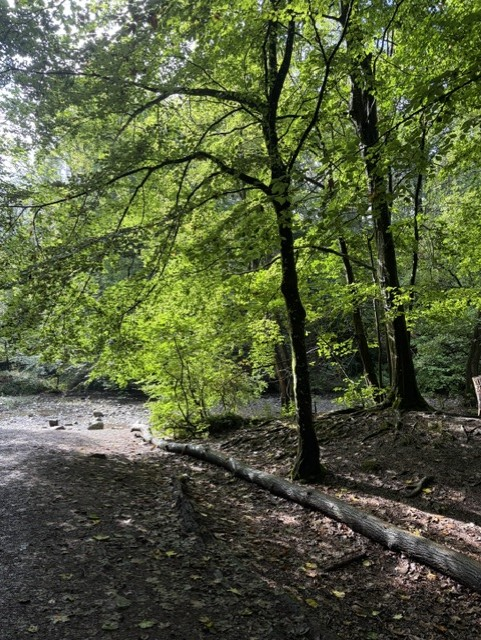
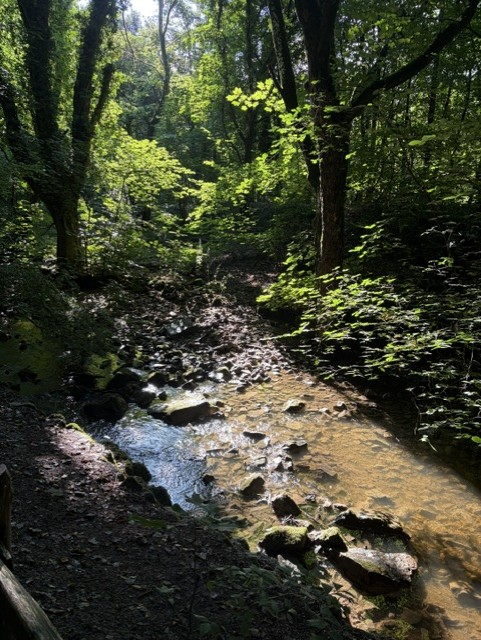
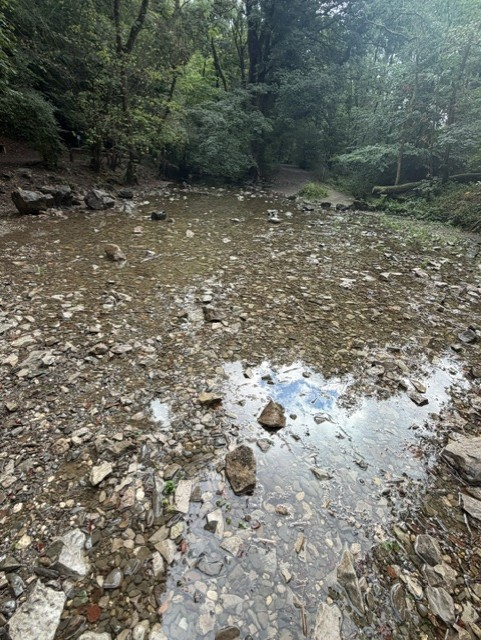
A couple of changes at Big Pool Wood in Gronant, Flintshire, since we were last here only a month ago. First, there were several inches of water at the bottom of the pool – not much, considering all the rainfall we’ve had recently, but an improvement on last time, when the long dry spell had left just patches of mud. Second, sections of reeds had been cut back around the reserve. This work is carried out by the North Wales Wildlife Trust volunteers and is an essential part of maintaining the site.
It was a nice 22°C when we arrived with a light south-easterly breeze blowing, though this was barely noticeable in the shelter of the woods. There was the odd shower at first, but the sun came out mid-morning and it became quite hot. Being the rock’n’roll rebels that we are, we went round anti-clockwise this time – well, all right, we just fancied a change!


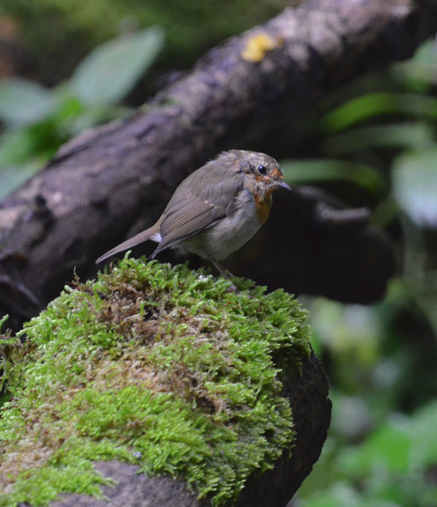
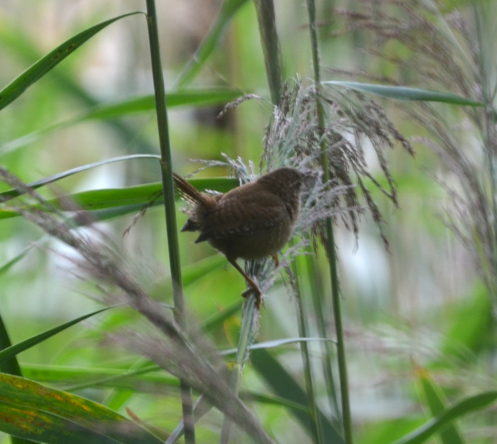
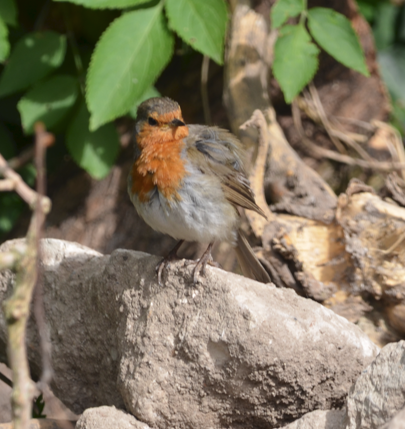
Top: An immaculate Robin and, bottom: a less than tidy Wren
From the first hide, we watched a Wren (Troglodytes troglodytes) creeping about a holly tree. It looked a little unkempt, unless it was still moulting. By comparison, the Robin (Erithacus rubecula) was immaculate in its new feathers – clearly dressed to impress!
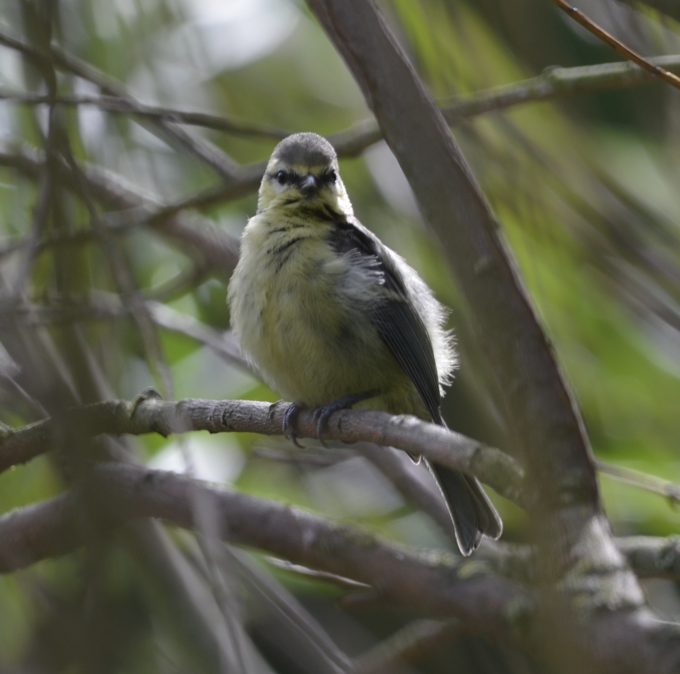
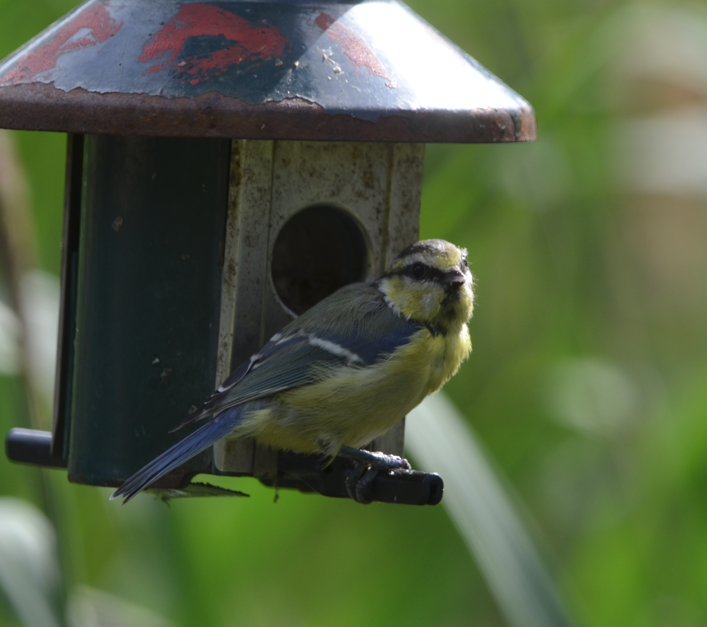
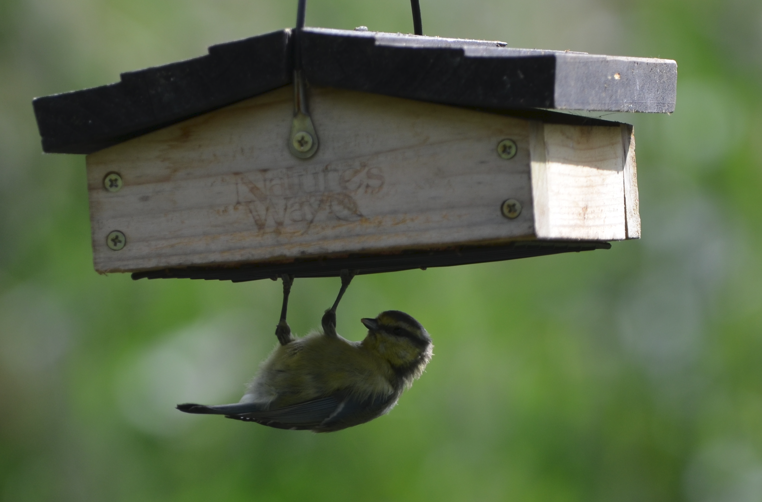
Blue tits (Cyanistes caeruleus) and Great tits (Parus major) zipped in from the surrounding trees and help themselves from the feeders.


Top: Blue tits (‘who are you looking at?’); bottom: Great tit
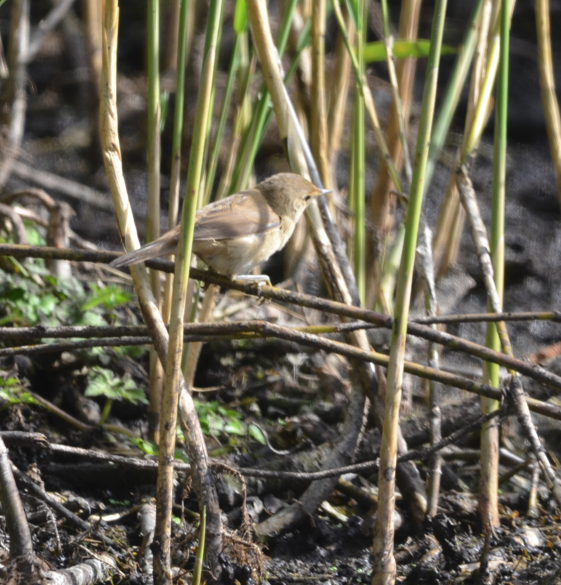
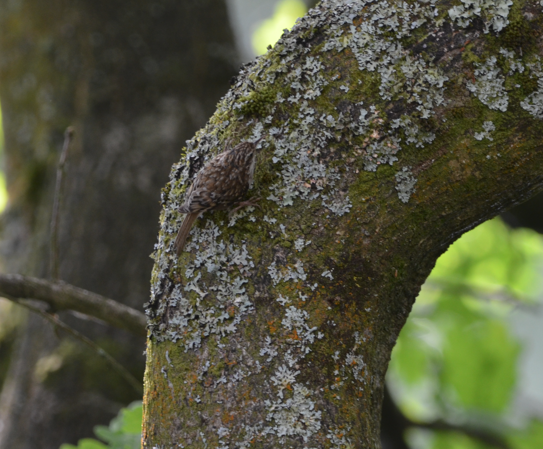
And we saw a family of Dunnocks (Prunella modularis) exploring the undergrowth. Initially, there was just the one adult bird, which was difficult to see: the Dunnock’s dull, streaky brown back feathers and grey chest and head were ideal camouflage against the backdrop of the reeds. But this bird became bolder later, encouraging the other three family members to come out from cover. This was an unusual sight – I don’t think we’ve ever seen more than one Dunnock at a time. A lovely bird.


Top: Dunnock blending in with the reeds and; bottom: becoming a little bolder
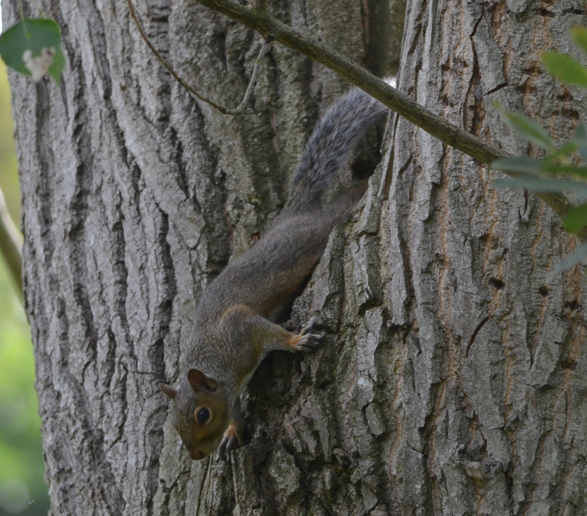
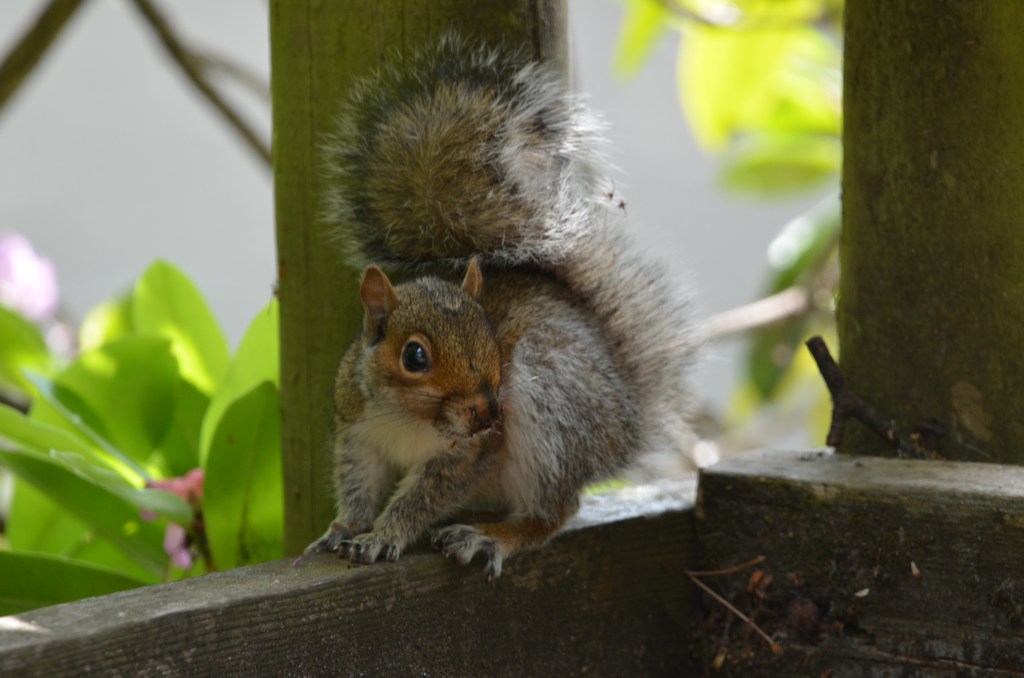
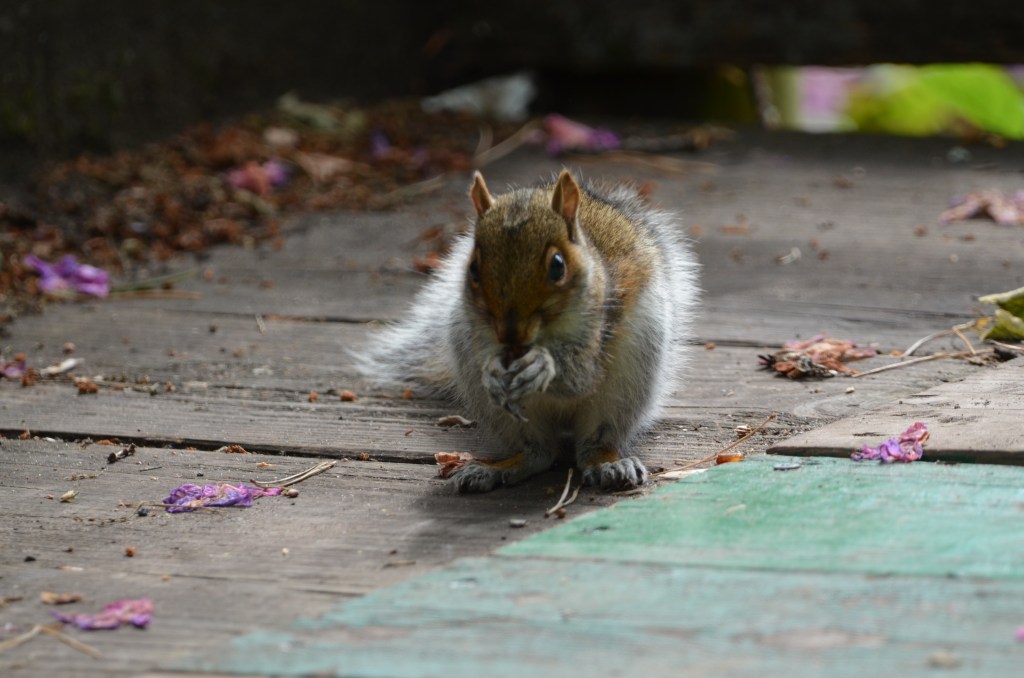
There were creatures other than birds about, including a Grey squirrel (Sciurus carolinensis) which tentatively approached the area of ground underneath the feeders, seeking spilled nuts and seeds. It retreated into the undergrowth as a Robin flew in, the sudden movement startling it. It soon returned though and even managed to pose for a photograph!

Grey squirrel showing its best side for the camera
Once the squirrel had finally gone, a Brown rat (Rattus norvegicus) showed its face from a small hollow at the base of a nearby tree. The rat stayed there for quite some time sniffing the air, before eventually moving out along the ground. It shot back to its hidey-hole as the Robin suddenly returned. After the Robin had flown away again, the rat came out and moved across the ground once more, hurrying for a short distance to a sort of jetty – I think it was just a long-submerged plank of wood at the base of the pool. We’d both been thinking that the rat was after food dropped from the feeders but were surprised to see it head straight for the water and start drinking. It must have been very thirsty as it drank for several minutes.

Brown rat tentatively checking its surroundings before venturing out for a drink of water
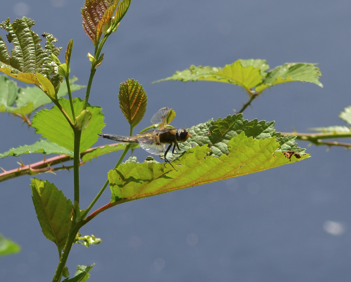
It’s an obvious observation, I suppose, but a water source does attract animals of all kinds. We saw several dragonflies flying around a different section of the pool (we were at a different hide now). One dragonfly in particular seemed to be zipping around chasing off other, smaller, dragonflies. Judging by its huge size and its vivid blue colour, this one was an Emperor dragonfly (Anax imperator). The others seemed to be Common darters (Sympetrum striolatum), which are reddish-orange dragonflies with narrow bodies. These were just as fast as the Emperor and it was incredible how they seemed to race around and then just come to a complete halt, mid-air! Some of the Common darters were linking head-to-tail, presumably a prelude to mating.

Common darter
On our way back to the car, we heard lots of honking from over the fields. There was a large, mixed flock of Greylag (Anser anser) and Canada geese (Branta canadensis) gathered across a couple of nearby fields.

A mixed flock of Greylag and Canada Geese
These fields are very close to the Dee Estuary and provide fertile ground on which to forage, hence the presence of so many birds. Small groups of geese flew off as others landed and there were actually many more birds in the fields than the photograph indicates.


Top: Alder leaves uniformly fragmenting; bottom: unknown fungus
The important stuff
We called in at the Abakhan café in Mostyn for refreshments. Col had a White Chocolate and Cranberry slice with his cappuccino, while Stu opted for a slice of Lime and Coconut Cake with his. Very nice!